Mortgage Pre-Qualification vs. Pre-Approval: What Homebuyers Need to Know
Mortgage pre-qualification and pre-approval both estimate how much you may be able to borrow, but they are not the same thing. Understanding the differences can help you move through the home buying process with confidence and clarity.
Custom HTML/CSS/JAVASCRIPT
Definitions, Processes, and Outcomes
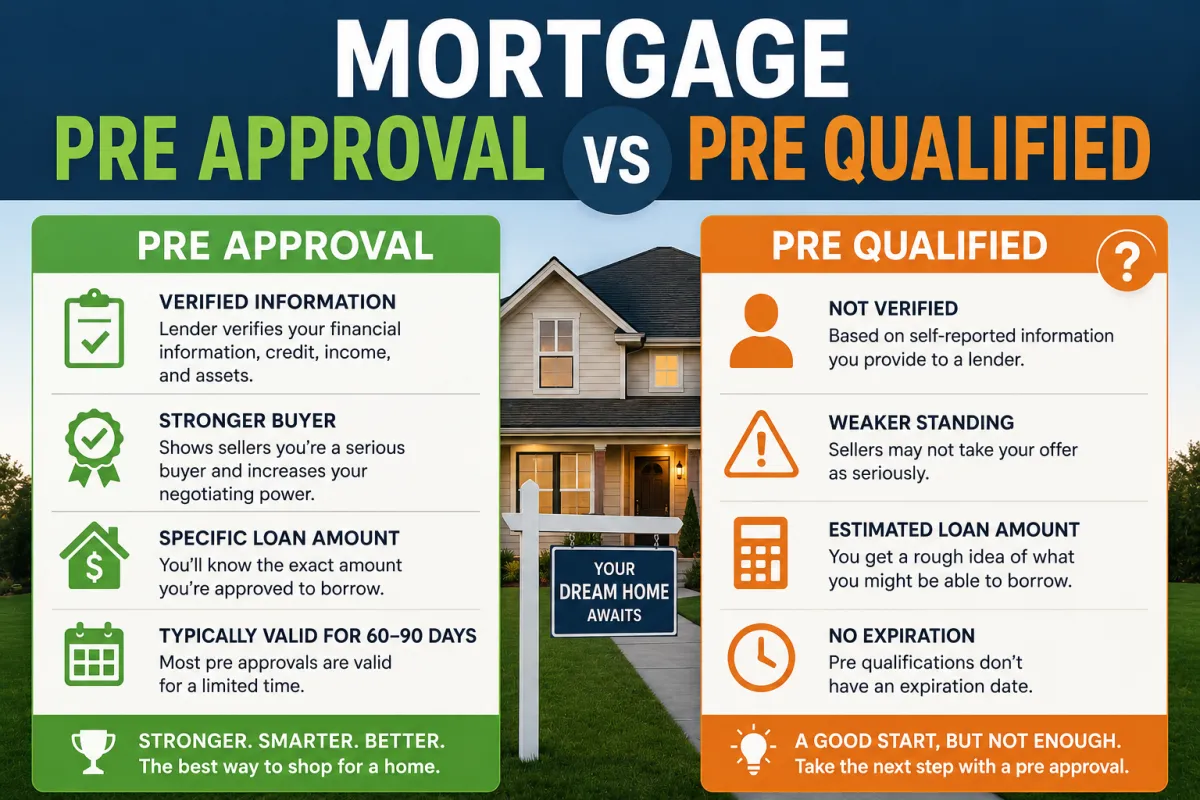
Pre-qualification is an informal first step. You share basic information about your income, debts, and savings—often verbally or online—and the lender gives a rough estimate of how much you might borrow. It usually does not involve verifying documents or pulling a full credit report, so the outcome is an educated guess, not a commitment.
Pre-approval is more formal and detailed. The lender reviews pay stubs, bank statements, tax returns, and runs a credit check. If you qualify, you receive a written pre-approval letter stating a specific loan amount, subject to final underwriting and property approval. This is a stronger signal of your borrowing power.
Depth, Formality, and Impact on Your Home Search
In terms of depth of evaluation, pre-qualification is quick and surface-level, while pre-approval involves thorough documentation and credit review. Regarding formality, pre-qualification is a conversation; pre-approval is an official lender decision with a letter you can show sellers.
The commitment also differs. Pre-qualification does not bind the lender or the borrower. Pre-approval is still not a final loan, but it reflects a conditional commitment based on verified information, giving everyone more certainty.
A strong pre-approval letter can make your offer stand out in a tight market.
For usefulness, pre-qualification is helpful early on to set a rough price range and explore options. Pre-approval becomes crucial when you are ready to make offers, as it can speed up acceptance and closing. By understanding these differences, potential homebuyers can better navigate the mortgage process, avoid surprises, and make informed decisions about when to move from casual browsing to serious buying.

 Mary Ellen Vanaken: North Atlanta Real Estate Trends Published on: 03/09/2026