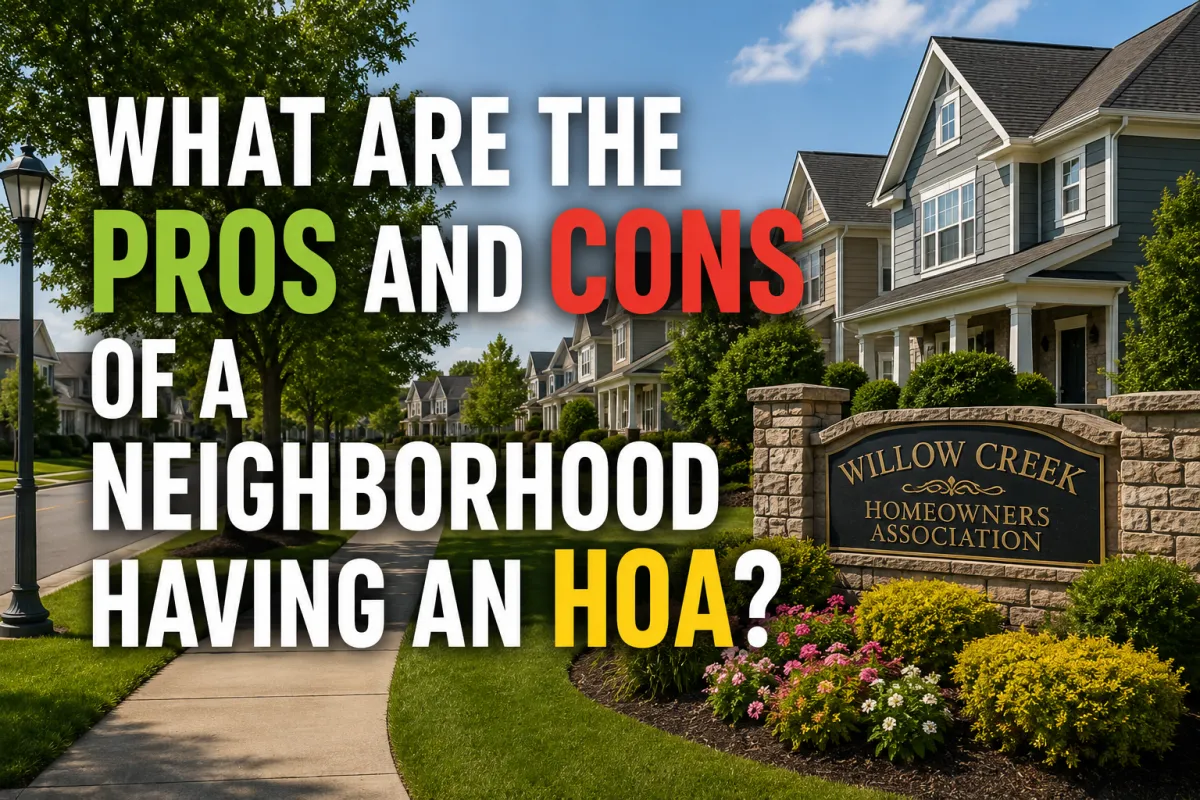
Homeowners’ Associations (HOAs): Pros and Cons to Know Before You Buy
HOAs can create tidy, well‑run neighborhoods—but they also add costs and rules. Understanding the trade‑offs helps you decide if HOA living fits your lifestyle and budget.
Custom HTML/CSS/JAVASCRIPT
The Upside of HOA Communities
HOAs typically handle community maintenance and aesthetics, keeping landscaping, signage, and shared spaces consistent. This curb appeal supports property value protection, since everyone must follow similar standards. Many offer desirable amenities—pools, gyms, parks, or clubhouses—paid for and maintained collectively. They can also provide structured conflict resolution for neighbor disputes, host community events that build connection, and sometimes fund neighborhood security, such as gates, cameras, or patrols.
The Downsides and Hidden Risks
In return, you pay ongoing fees, which can rise over time, plus occasional special assessments for big projects. Detailed restrictions and rules may limit paint colors, parking, rentals, and more, leading to limitations on personalization of your home. Boards enforce these rules through enforcement and penalties, including fines or, in extreme cases, legal action.
There’s always a risk of potential for mismanagement of funds or records, and HOA power dynamics can feel political, especially if a small group dominates decisions. Disagreements may escalate into costly legal disputes between owners and the association. HOAs can affect resale impact too: strong, well‑run associations attract buyers, while poorly run ones can scare them off—illustrating the variable quality from one HOA to another.
Reviewing budgets, rules, and minutes reveals how healthy an HOA truly is.

 Mary Ellen Vanaken: North Atlanta Real Estate Trends Published on: 03/09/2026