Home Decor, Color Theory
Choosing the Right Colors for a Harmonious Home
Beautiful interiors aren’t just about taste—they’re about understanding the science of how colors work together.
Custom HTML/CSS/JAVASCRIPT
Why Complementary Colors Matter
Complementary colors—those opposite each other on the color wheel, like blue and orange or yellow and purple—are rooted in visual science. When placed side by side, they enhance each other’s intensity, creating a balanced yet lively effect. Used wisely, this contrast keeps a room from feeling flat without tipping into chaos. A soft blue-gray sofa, for instance, comes alive with rust or terracotta cushions because your eye naturally enjoys that contrast.
The Color Wheel: From Newton to Your Living Room
The color wheel dates back to Sir Isaac Newton, who first mapped colors in a circle to show their relationships. Today, designers still rely on this simple tool to build harmonious interiors. By looking at the wheel, you can quickly spot complementary pairs, soothing analogues (colors next to each other), or balanced triads. Start with a neutral base—whites, beiges, soft grays—then use the wheel to choose one main accent color and a complementary or analogous partner for cushions, art, and textiles.
Read on: https://bit.ly/clrwheel
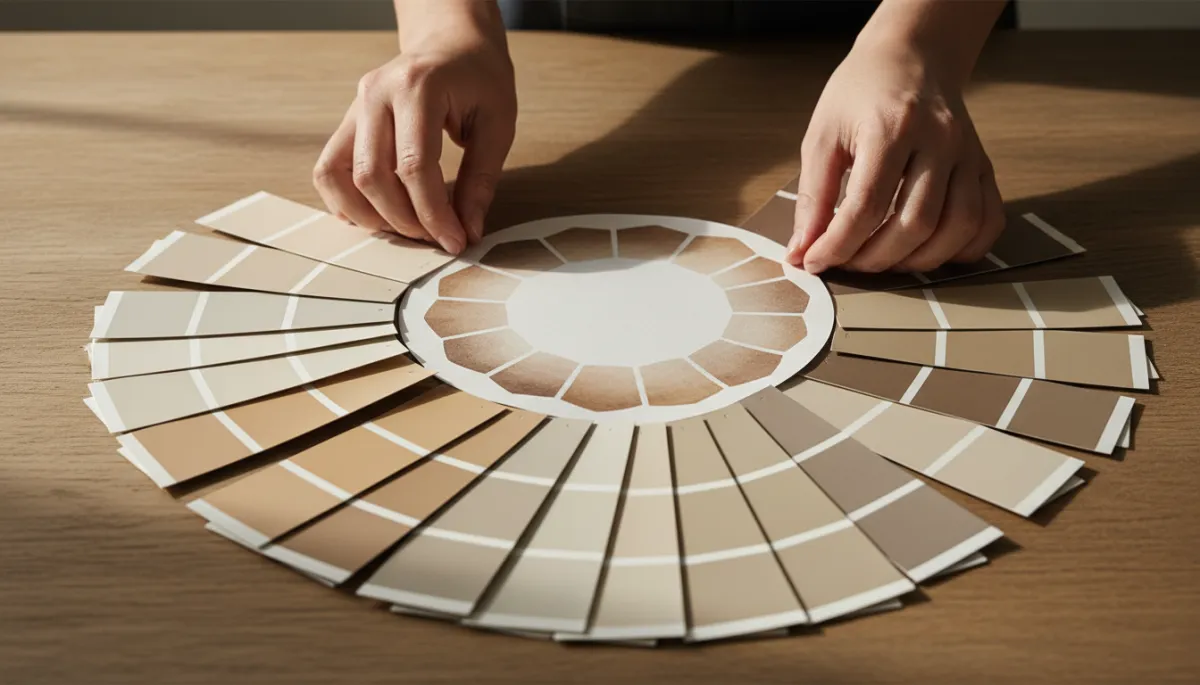
A simple color wheel helps translate timeless color science into everyday decorating decisions.

 Mary Ellen Vanaken: North Atlanta Real Estate Trends Published on: 03/09/2026